23 October 2026
Hydraulic vs Electric Paper Guillotines: Key Differences
Hydraulic paper guillotines use pressurised oil to drive the blade, clamp, or both; electric models use an electro-mechanical cutting mechanism. Both run on electricity, but their drive systems differ. Hydraulic equipment can suit sustained production and demanding stock, while electro-mechanical guillotines provide reliable cutting for many routine and commercial applications. The better choice depends on your materials, daily output and required control.
What Are Hydraulic Paper Guillotines?
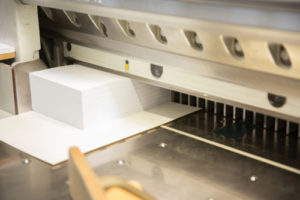
A hydraulic guillotine uses an electric motor to power a pump. This supplies pressurised oil to cylinders that move the blade or clamp. On fully hydraulic machines, this system powers both the clamp and the blade.
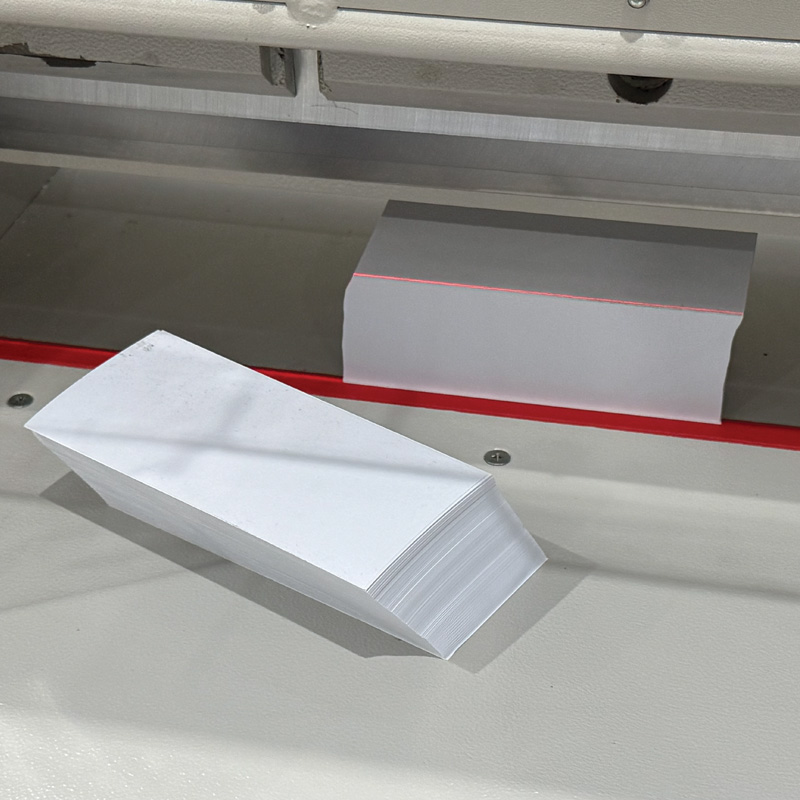
Before cutting, the clamp holds the paper stack against the table. Adjustable pressure helps secure different materials firmly without applying excessive force to delicate print.
Some guillotines combine a hydraulic clamp with an electro-mechanical blade. Check these components separately when comparing equipment, as “hydraulic” does not always refer to the entire cutting mechanism.
Advantages of Hydraulic Guillotines
Hydraulic blade drives provide controlled force for demanding cutting work. Machines designed for prolonged operation can support busy production schedules, particularly where substantial batches pass through the guillotine throughout the day.
A hydraulic clamp also gives operators control over holding pressure. This helps when switching between stocks with different handling requirements, such as coated sheets, card and digitally printed materials.
Depending on the model, other features may include powered blade return and a foot treadle for pre-clamping awkward work. These can improve handling, although overall accuracy still depends on blade condition, paper alignment and backgauge positioning.
Hydraulic Costs and Maintenance
Hydraulic systems include oil, seals, cylinders and a pump, adding maintenance requirements alongside routine mechanical servicing. Follow the manufacturer’s instructions for fluid changes and leak checks.
Purchase costs can also exceed those of a comparable electro-mechanical machine. That investment makes more sense when the cutting demands justify it. For occasional batches, hydraulic operation may offer little practical advantage over a suitably specified alternative.
Compare service provision as well as purchase price. Access to experienced engineers and replacement parts helps keep equipment available when production depends on it.
Where Hydraulic Guillotines Work Best
Commercial printers, university print departments, and larger corporate print rooms often benefit from hydraulic machinery when cutting takes up a significant part of the working day.
Applications include trimming book blocks, processing repeated batches and cutting substantial stacks within the equipment’s rated capacity. Businesses handling difficult stock may also benefit from the available cutting force.
For example, a print room producing a mix of bound publications and customer literature may need more flexibility than one trimming the same lightweight paper each week. Consider hydraulic equipment where that variety places greater demands on the cutting system.
What Are Electric Paper Guillotines?
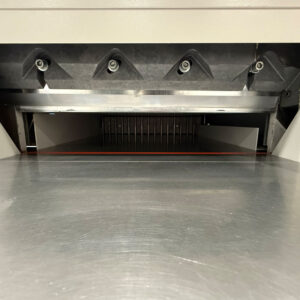
An electric paper guillotine uses a motor-driven mechanical system to move the knife. Its clamp may operate manually, electro-mechanically or hydraulically, depending on the design.
A backgauge sets paper position and determines the finished cutting size. Operators can adjust it by hand or move it electrically. Programmable controls let operators store sequences for repeat jobs, reducing the need to re-enter every measurement.
The category includes compact office equipment and larger commercial machines. Drive type alone therefore tells you little about working width, stack capacity or production speed.
Advantages of Electric Guillotines
Electro-mechanical cutting removes the physical effort of pushing a blade through a paper stack. It offers a practical route from manual trimming to powered batch production.
For smaller workplaces, compact models can provide useful cutting capacity without requiring a large operating area. Commercial versions may include automatic clamps, adjustable pressure, and programmable backgauges, giving operators greater control for repetitive work.
Machines with electro-mechanical blade and clamp drives also avoid hydraulic fluid servicing. They still require appropriate maintenance, but this configuration has no hydraulic circuit to inspect or maintain.
Limitations of Electric Guillotines
Electro-mechanical cutting performance varies between machines. Some models are less suited to prolonged heavy-duty work or challenging stock than equipment designed specifically for those conditions.
Clamping arrangements can introduce further restrictions. A basic automatic clamp may offer less adjustment than a more advanced system, limiting control over how firmly materials are held.
On simpler machines, manual backgauge adjustment also adds setup time between cuts. This matters when a job involves several finished sizes, although powered and programmable versions can reduce that work.
Where Electric Guillotines Work Best
Schools, offices and copy shops commonly use electric guillotines for stationery, leaflets, reports and teaching materials. Appropriately specified commercial models also serve digital printers and established production environments.
They can be a sensible choice when cutting occurs between other finishing tasks, rather than continuously throughout a shift. A department producing several short batches may gain more from straightforward controls and quick setup than from additional cutting power.
For repeat work, stored programmes can be particularly useful. Operators can recall a familiar sequence instead of measuring and positioning each cut from the beginning.
How Do You Choose a Paper Guillotine?
Begin with the jobs you actually produce. Record sheet sizes, paper types, stack heights and typical batch quantities, then consider what happens during your busiest periods.
The most useful comparisons cover:
- Cutting dimensions: Check maximum width, table depth behind the blade and minimum cut size against your layouts.
- Capacity and workload: Compare permitted stack height and the manufacturer’s guidance on daily use.
- Job changes: Assess how easily operators can adjust settings, recall programmes and handle different materials.
- Safety and operation: Review guarding, two-hand controls, operator training and blade-changing arrangements.
- Installation and ownership: Include electrical supply, access, working space, servicing and consumables in your budget.
Use millimetres as well as quoted sheet counts when assessing capacity. Paper thickness varies, so figures based on lightweight stock may not represent your usual work.
Cutting speed also needs context. Loading, aligning, turning, and unloading paper all affect turnaround time. A faster blade cycle will offer limited benefit if material handling remains slow.
Choose hydraulic equipment when its force and operating capacity address a clear production requirement. Select an electro-mechanical guillotine when it handles your workload effectively at a suitable overall cost. Don’t rule out either option simply because of its drive label.
Before deciding, ask for a demonstration using representative materials. Watching a complete job move through the machine provides a clearer picture than comparing headline specifications alone.
Why Choose AfterPrint for Paper Guillotines?
The AfterPrint team brings over 50 years of combined print-finishing experience to help you assess paper guillotines for your cutting formats, stock and production schedule. Contact us to discuss hydraulic and electro-mechanical options, installation requirements and ongoing support. Together, we can help you find a machine that keeps everyday work moving and allows for the jobs ahead.