28 August 2026
Hot vs Cold Laminating: Key Differences Explained
The main difference between hot and cold laminating is how the film bonds to the print. Hot (thermal) lamination uses heat and pressure to activate the film’s adhesive, while cold lamination uses a pressure-sensitive adhesive without requiring high temperatures.
Both methods can protect and enhance printed materials, but the right choice depends on the print, substrate, required finish and production volume.
Hot vs Cold Lamination at a Glance
Hot/thermal lamination uses heat and pressure to activate the film adhesive. It is commonly used for paper-based print, documents and longer production runs, with both pouch and roll-fed systems available.
Cold/pressure-sensitive lamination uses pressure-sensitive adhesive without requiring high temperatures. It is particularly useful for heat-sensitive print, photographs, vinyl, graphics and many wide-format applications.
In simple terms, hot lamination is often the practical choice for general print and production work, while cold lamination is better suited to materials that could be affected by heat.
What is Thermal Laminating?
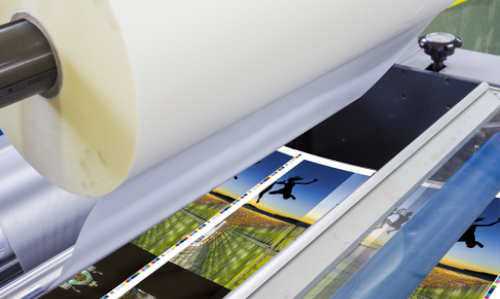
Thermal lamination, also known as hot lamination, passes film and printed material through heated rollers. The rollers apply pressure while bringing the film to the required operating temperature. Once heated, the adhesive activates and forms a consistent bond with the print.
The process is commonly used for compatible paper and card, including menus, teaching resources, signs and other frequently handled printed materials.
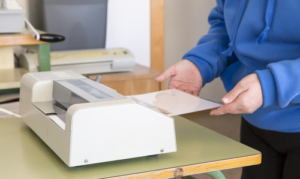
Pouch laminators enclose individual documents in pre-cut pouches, while thermal roll laminators use continuous rolls of film for ongoing or repeated production.
Explore AfterPrint’s range of professional laminating machines to compare equipment for different applications and production requirements.
Successful thermal lamination depends on the right combination of film, temperature and operating speed. The film must also be compatible with the machine and material being laminated. Incorrect settings can result in clouding, curling or poor adhesion.
Advantages of Thermal Laminating
- Produces a consistent bond on compatible print and paper.
- Adds protection and durability to frequently handled materials.
- Supports efficient, continuous production with suitable roll-fed equipment.
- Offers a wide choice of finishes, including gloss and matt.
- Uses widely available films for many common print-finishing applications.
Thermal Laminating Considerations
Hot lamination isn’t suitable for every job. Heat-sensitive materials, inks and coatings may curl, distort or change appearance when exposed to higher temperatures.
Thermal equipment also requires warm-up time, while temperature and speed need to be matched correctly to the film, adhesive and substrate.
Thermal laminators should be cleaned and maintained in accordance with the manufacturer’s recommendations to support consistent results.
What is Pressure-Sensitive Laminating?
Pressure-sensitive lamination, commonly known as cold lamination, uses film with a pressure-sensitive adhesive rather than an adhesive that needs to be activated by high temperatures.
A release liner protects the adhesive until the film is applied. Rollers then apply controlled pressure to bond the film to the printed material.
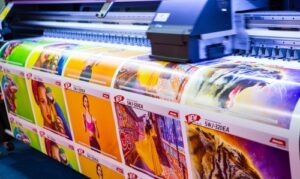
Cold lamination can be particularly useful for photographs, artwork, vinyl graphics and other materials that may be affected by the temperatures involved in conventional thermal lamination. It is also widely used for posters, signs, displays and larger-format graphics.
For larger output, explore AfterPrint’s wide-format laminating machines, or browse the complete range of commercial laminators to compare available formats.
It’s worth noting that “cold” doesn’t always mean that no heat can be used. Some professional applications use low-temperature or heat-assist systems with pressure-sensitive films to improve application. Always follow the specifications of the film and machine being used.
Advantages of Pressure-Sensitive Laminating
- Protects temperature-sensitive print without exposing it to high heat.
- Requires no conventional thermal warm-up period.
- Works well with many photographs, graphics, vinyl and display applications.
- Provides an alternative where thermal lamination could affect the substrate or print.
Pressure-Sensitive Laminating Considerations
Cleanliness is particularly important during cold lamination. Dust or debris trapped between the film and print can remain visible beneath the finished surface.
Film should be loaded squarely and roller pressure applied evenly. Incorrect setup or application can result in bubbles, creases or an inconsistent finish.
Many pressure-sensitive films use release liners, which can create additional waste during production. Film costs, roll widths and machine compatibility should therefore be considered before choosing a system.
Choosing Between Hot and Cold Lamination
Rather than choosing a laminator based solely on price or headline speed, start with the work you actually need to produce.
Volume and Frequency
Consider your busiest daily or weekly workload, including typical batch sizes.
Hot lamination requires some warm-up time but can provide efficient continuous production once running. Cold lamination removes that warm-up period, although film handling and application speed still influence overall throughput.
For jobs requiring continuous-film capacity, roll laminating machines are another option to consider.
Document Size
Check the widest material you currently produce and allow some additional capacity for registration and future requirements.
Standard documents require relatively little working width, while banners, maps, posters and exhibition graphics may require wide-format laminating equipment.
Choosing an unnecessarily large machine can also take up valuable production space, so working width should reflect the jobs you genuinely expect to handle.
Print and Substrate Compatibility
Consider every material likely to pass through the machine, including paper, card, toner-based print, inkjet output, vinyl and specialist substrates.
Heat-stable materials may be suitable for thermal lamination, while temperature-sensitive output may require pressure-sensitive film.
If compatibility is uncertain, check the film and machine specifications and consider testing a sample before processing an entire batch.
Budget and Running Costs
The purchase price is only part of the cost of a laminating system.
Factor in laminating films and other consumables, electricity, operator time, expected waste, maintenance, servicing and potential downtime.
Comparing compatible laminating films and pouches is particularly important, as consumable costs can have a significant impact over the working life of the machine.
New or Used Equipment
A new laminator may provide current controls, automation and manufacturer support, while carefully selected used laminating machines can make higher-capacity equipment accessible within a tighter capital budget.
When considering pre-owned equipment, check that its specifications and condition are suitable for your requirements and ask about its service history and available support.
Finish and Durability
Think about how the finished item will be used.
Gloss films can create a brighter, higher-contrast appearance, while matt films reduce reflections and provide a more subdued finish. Film specification can also influence the feel, appearance and performance of the finished item.
The best specification is therefore the one suited to the finished application rather than a single film or setting used for every job.
Which Laminating Method Is Right for You?
Neither method is universally better. The right choice depends on the materials you work with, your production volumes and the type of finish required.
Hot lamination may be the better choice if you:
- Regularly laminate paper, card or printed documents.
- Need a durable finish using thermal film.
- Work with materials that can safely tolerate heat.
Cold lamination may be the better choice if you:
- Work with print, inks or materials that could be affected by heat.
- Produce posters, signs, graphics, vinyl or wide-format work.
- Need to use pressure-sensitive films for specialist applications.
- Want to start laminating without waiting for a machine to reach operating temperature.
For businesses handling a variety of print and finishing applications, access to both methods can provide greater flexibility.
Why Choose AfterPrint?
Choosing between hot and cold laminating involves more than comparing machine prices.
AfterPrint Ltd has over 50 years of combined print-finishing experience, helping customers assess their print, substrates, working widths, production volumes and required finishes before investing in equipment.
Our team can help you compare laminating machines and films for thermal and pressure-sensitive applications, and discuss new and pre-owned equipment based on your workload and budget.
We also offer servicing and maintenance support for print-finishing equipment.
Contact us today for friendly, professional advice and help finding the right laminating solution for your needs.