18 October 2026
7 Signs Your Paper Guillotine Needs Servicing
Regular servicing helps keep your paper guillotine cutting accurately and running reliably as blades and moving parts wear over time. Changes in cut quality, clamping, or operating noise may signal it’s time for a professional assessment. Loose parts, visible damage, and faulty safety features are further reasons to arrange support, even if the machine still cuts.
1. Blade Wear or Backgauge Misalignment
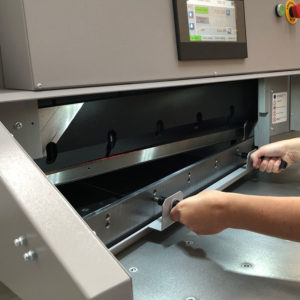
When familiar jobs start producing different finished sizes, the problem may extend beyond an isolated cutting error. Measurements that drift between batches can indicate backgauge movement or misalignment, while a blunt blade may pull through a stack unevenly.
Look for a recurring pattern: upper and lower sheets finishing at different sizes, edges becoming rougher, or cuts no longer matching the displayed measurement.
These changes warrant investigation when they persist during correctly set-up work. An engineer can assess blade condition and positioning accuracy together, rather than treating every poor cut as a sharpening issue.
2. Uneven Clamp Pressure or Clamp Wear
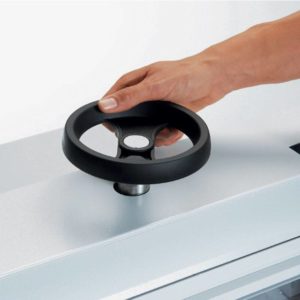
Paper moving beneath the clamp suggests the stack isn’t held securely. This may happen across the full width or affect one side more than the other.
You might notice sheets shifting as the blade descends, even if the clamp appears to engage normally. Uneven contact, worn components or a pressure fault can all contribute.
Persistent slipping warrants a service assessment because it affects material control during cutting. Increasing pressure to compensate may conceal the problem or mark delicate stock without resolving the underlying fault.
3. Wear Within the Drive Mechanism
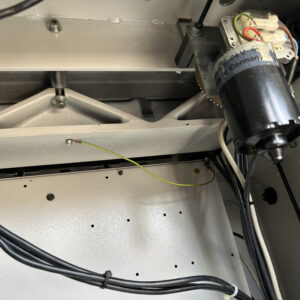
New knocking, grinding, or rattling sounds can indicate early mechanical deterioration. Increased vibration may accompany it, even while finished work still looks acceptable.
Changes from the guillotine’s usual operating sound matter more than noise alone. For example, a knock at one point in the cycle gives an engineer a different starting point than continuous grinding.
Stop operation when an unfamiliar mechanical noise develops. Record what you noticed and when it occurred, but do not run additional cycles simply to reproduce it.
4. Sticking Blade or Handle Mechanisms
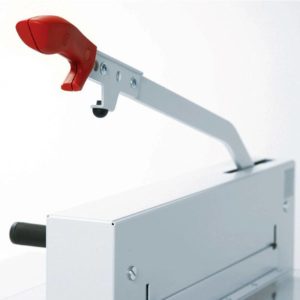
A manual handle that becomes harder to move, or a powered knife that hesitates or fails to return, indicates a change in normal operation. Jerky travel and unexpected movement also require assessment.
The cause may involve a sticking mechanism, worn guides or a fault in the drive or return system. Symptoms can overlap, so resistance alone does not establish which component has failed.
Do not force a handle or attempt to release a stuck blade by hand. Take the guillotine out of service and follow your approved isolation procedure before arranging professional support.
5. Loose Blade Guides, Pivots or Fittings
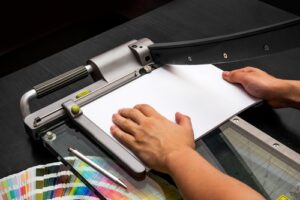
Excessive sideways movement, a loose handle connection or fittings that repeatedly work free can indicate wear beyond a routine adjustment.
Unlike a stiff mechanism, this fault allows movement where parts should remain securely located. An operator may notice a handle wobbling or a connection shifting before the cutting action begins.
Report looseness identified during authorised checks. Blade guides, pivots and structural fasteners can require specific clearances and tightening settings; tightening a fitting may not correct wear in the surrounding assembly.
6. Damage to the Handle, Mechanism or Base
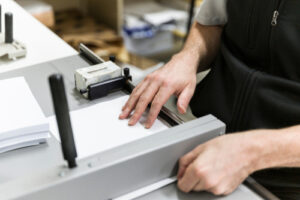
Assess cracks, bent components, and damaged mounting points before further use. Impact, overloading, or gradual deterioration may cause these issues.
A damaged handle can affect control, while distortion around the base or fixings may compromise support. Completing a cut does not confirm that these parts remain sound.
Surface scuffs alone do not necessarily indicate a mechanical fault. Structural damage, however, requires an inspection to establish its extent and whether repair or replacement is appropriate. Include details of any recent impact when reporting the problem.
7. Faulty Guards, Locks or Safety Controls
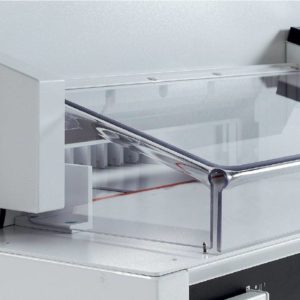
A loose guard, unreliable blade lock, or damaged safety control requires immediate action. Depending on the machine, safeguards may include interlocked covers, two-hand controls and light curtains.
If any failure occurs during an approved pre-use check, remove the equipment from service. Do not bypass a switch, secure a guard with a temporary repair or continue because the blade operates normally.
HSE guidance on printing machinery stresses that safety features must remain in good condition and function correctly. Complete repairs and verification before production resumes.
Additional Warning Signs on Hydraulic Guillotines
Hydraulic faults can affect oil supply, holding pressure and pump operation. These signs help distinguish a hydraulic problem from the more general mechanical issues described above.
Hydraulic oil leaks
Fresh oil beneath the guillotine or around hoses, connections and cylinders can indicate a failed seal or damaged component. Even a small recurring leak warrants investigation.
Report its location without removing covers or touching the suspected source. Hydraulic fluid can remain under pressure, so a qualified engineer should locate and repair the fault.
Clamp pressure dropping during a cut
A clamp that grips initially but then loses holding force may be failing to maintain hydraulic pressure. This differs from a consistently low pressure setting.
An unexpected fall on a pressure display, where fitted, or a loss of grip after engagement can help an engineer identify the problem. Continuing to cut risks further material movement, so stop production rather than adjusting settings to compensate.
Excessive heat or unusual whining
Hydraulic systems produce heat during normal use. An unexplained increase, a temperature warning, or a new, pronounced whine can indicate restricted flow, air entering the system, or pump deterioration.
These symptoms do not identify a single cause. Report any accompanying loss of performance and arrange an assessment before returning the machine to use.
For day-to-day upkeep, our paper guillotine maintenance guide covers routine care. The warning signs above call for a different response: identifying a developing fault and establishing whether the equipment remains suitable for operation. They should not replace scheduled servicing or safety inspections.
Why Choose AfterPrint for Guillotine Servicing?
When your guillotine’s performance changes, our team at AfterPrint can help you arrange fault diagnosis, servicing and maintenance. We also provide guillotine safety inspections, repairs, blade sharpening and fitting. Contact us with the make, model, and a description of the symptoms so we can discuss the right next step. Clear information upfront helps us plan support and get your print room running again.