
Why Invest in Print Finishing Equipment?
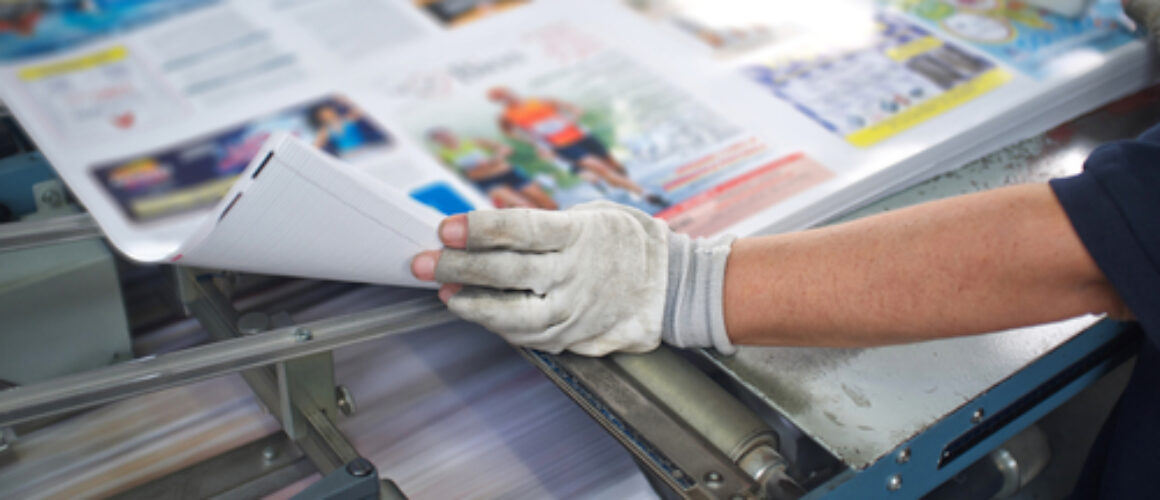
Great print doesn’t stop when it comes off the press. Cutting, folding, creasing, laminating and binding can all play an important part in turning printed sheets into finished products that are ready for your customers.
If you regularly outsource some of these processes, bringing the right print finishing equipment in-house could give you more control over your workflow, turnaround times and the types of jobs you can take on.
Of course, investing in equipment needs to make sense for your business. The best place to start is with the work you already produce, how often you need particular finishing processes and where having your own equipment could make life easier.
What Are the Benefits of Bringing Print Finishing In-House?
Not every finishing process needs to be brought in-house. If you only need a specialist finish occasionally, outsourcing may continue to work perfectly well.
But when you’re regularly sending the same types of finishing work elsewhere, having your own equipment can offer some useful advantages.
Greater Control Over Your Workflow
Sending work to an external supplier adds another stage to the production process.
With suitable finishing equipment on-site, you have more control over when jobs are completed and how they move through production. That can be particularly helpful when you’re juggling several jobs or working towards a tight deadline.
Faster Turnaround
Bringing finishing in-house can remove the time involved in sending printed materials elsewhere and waiting for the completed work to come back.
Exactly how much time you can save will depend on the job and equipment, but being able to move directly from printing into finishing can make planning your production schedule easier.
More Flexibility
No two customers or print jobs are exactly the same.
Having access to your own finishing equipment can give you more flexibility when dealing with different formats, quantities and finishing requirements.
It can also be useful for shorter runs, samples and jobs that need to move through production quickly.
Less Reliance on Outsourcing
There’s nothing wrong with outsourcing finishing work, particularly when a job requires specialist equipment you don’t use very often.
However, if you’re regularly outsourcing the same process, it may be worth looking at whether bringing it in-house would work better for your business.
When comparing the two options, consider the cost of the equipment alongside consumables, operator time, maintenance and how frequently you’re likely to use it.
More Control Over the Finished Job
Keeping more of the production process under one roof gives you greater oversight from the printed sheet through to the finished product.
It can also make it easier to produce samples, try different materials or make adjustments before completing the full job.
What Print Finishing Equipment Could You Bring In-House?
Print finishing covers everything from everyday document finishing through to commercial book and print production, so there’s a wide range of equipment available.
Binding Machines
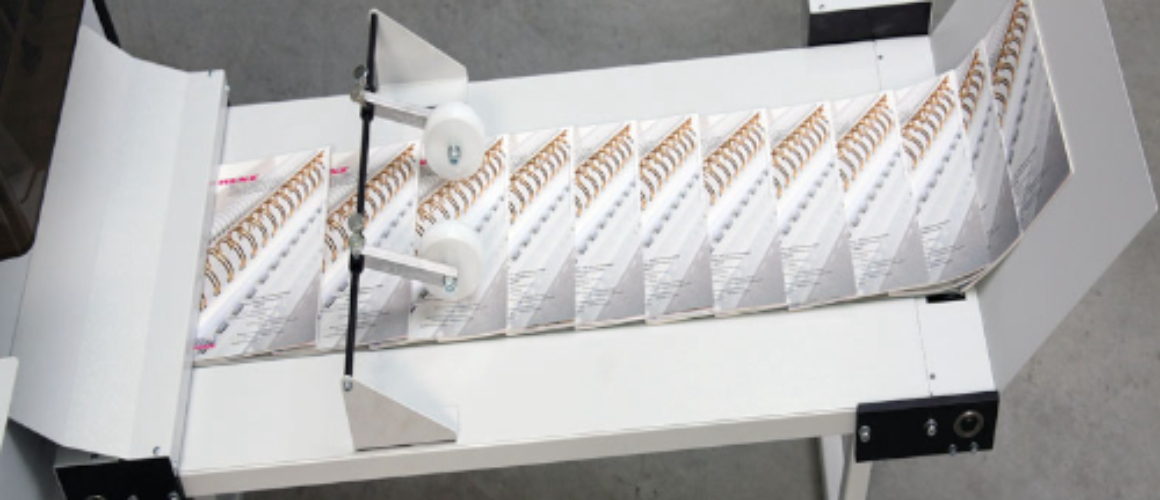
Binding machines turn loose printed sheets into finished documents and publications.
There are plenty of methods to choose from, including wire, coil, comb, thermal and perfect binding. The right option depends on the documents you’re producing and the finish you want to achieve.
If you’re comparing your options, our guide to choosing a binding method explains the main approaches and what to consider.
Laminating Machines
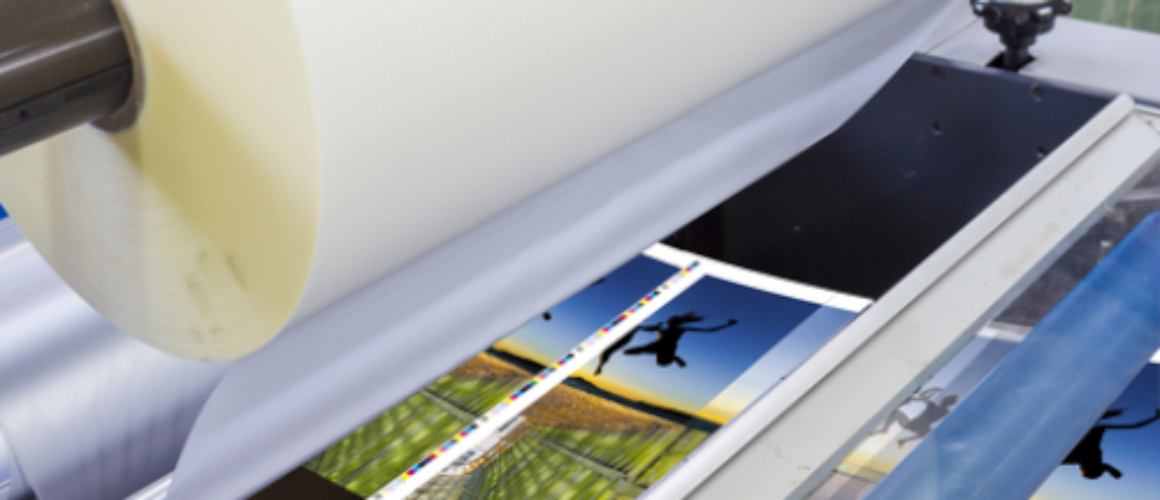
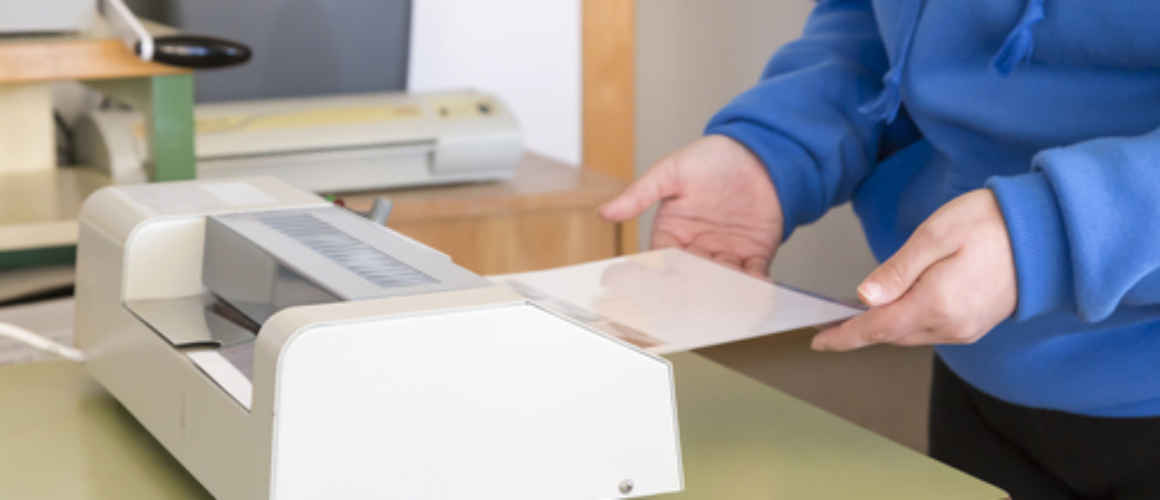
Laminating equipment can be used for everything from individual documents and menus to commercial print, signage and wide-format graphics.
Options include pouch, roll-fed, digital and wide-format laminators.
Our guide to choosing a laminator looks at the main things to consider when comparing machines, while our hot vs cold laminating guide explains the differences between the two methods.
Cutting and Trimming Equipment
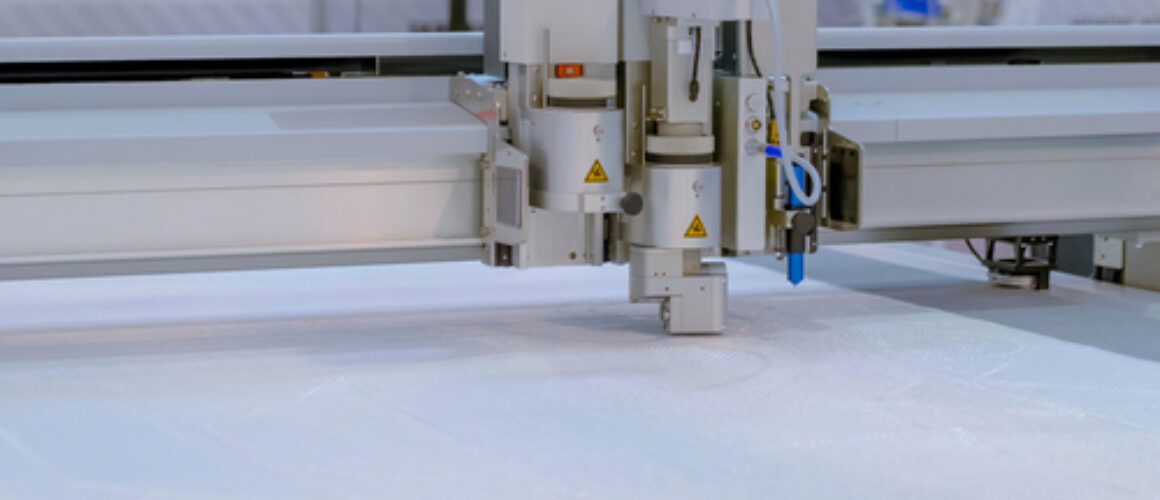
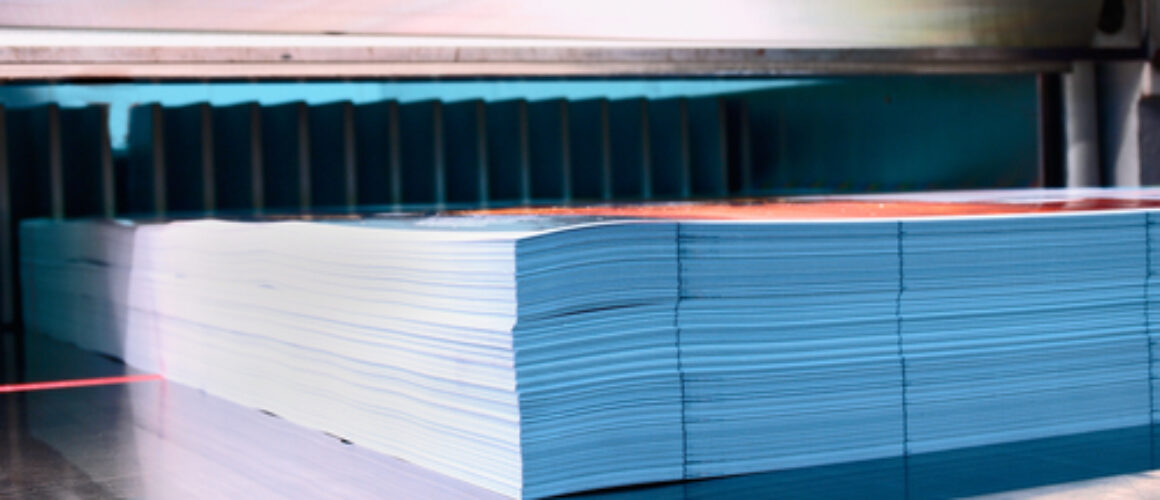
Guillotines, trimmers and other cutting equipment can help you prepare and finish printed materials without sending the work elsewhere.
The right machine depends on what you’re cutting, the sizes you work with, and the volume of work you need to handle.
Creasing and Folding Equipment
Brochures, leaflets, cards and booklets can all involve creasing or folding as part of the finishing process.
If these are products you regularly produce, bringing the process in-house can give you more control over when the work is completed and how it fits into the rest of your workflow.
Shredding Equipment
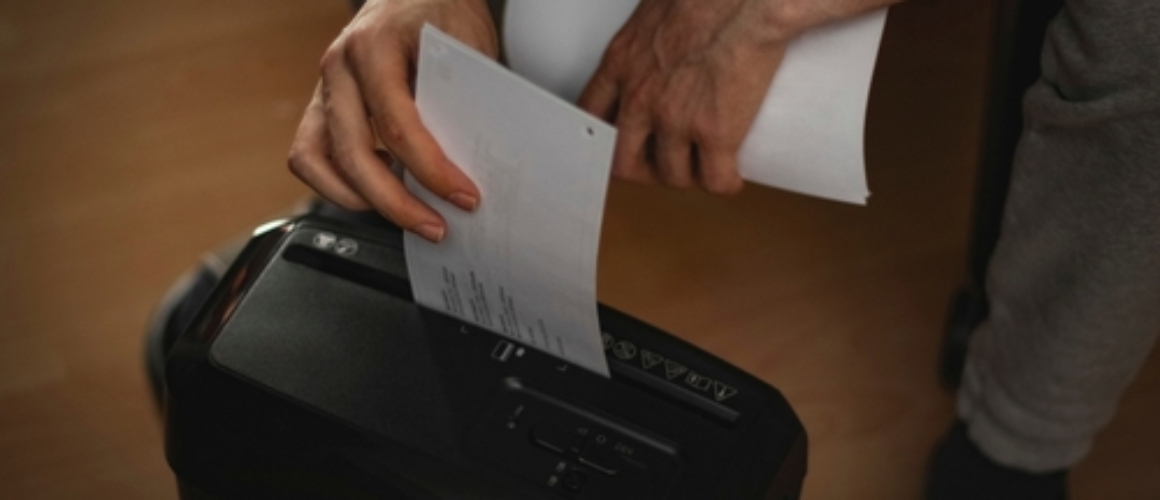
Paper shredders can also be useful within print rooms, offices and production environments.
Different machines offer different capacities and security ratings, so it’s worth choosing one that suits both the information you handle and the amount of paper you need to process.
Our guide to paper shredder security levels explains the P-1 to P-7 ratings in more detail.
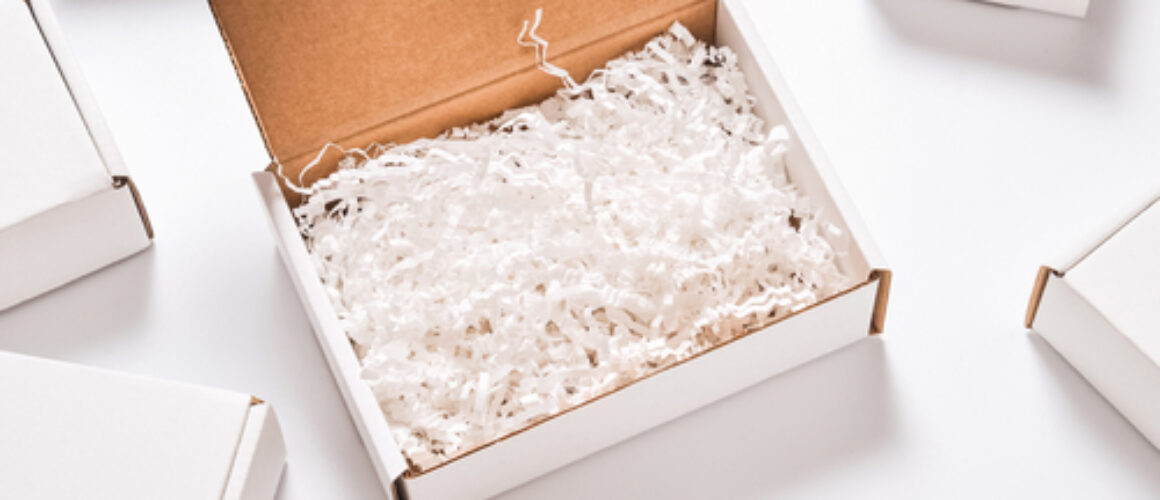
Packaging and Other Finishing Equipment
Finishing doesn’t necessarily end with cutting, binding or laminating.
Depending on your business, you may also need equipment to package and prepare finished work for storage, collection or delivery.
Is It Time to Bring Print Finishing In-House?
There’s no magic number of jobs that suddenly makes buying equipment the right decision.
Instead, look at what’s happening in your business now.
Are you regularly outsourcing the same finishing work? Are external turnaround times making jobs harder to schedule? Is there a type of work you’d like to offer but can’t finish yourself right now?
It can help to consider:
- Which finishing processes you use most often
- How much work you currently outsource
- How frequently the equipment would be used
- The sizes and materials you normally work with
- The space you have available
- The consumables you’ll need
- Servicing and maintenance requirements
- The types of jobs you’d like to produce in the future
These questions can give you a much better idea of whether bringing a particular process in-house makes sense for your business.
Choosing the Right Print Finishing Equipment
Once you’ve decided a process could be worth bringing in-house, the next step is finding equipment that fits how you work.
Think about your usual production volumes, the materials and sizes you handle, the space available and how the machine will fit into your existing workflow.
It’s also worth looking beyond today’s jobs. If you’re planning to grow a particular area of the business, consider whether the equipment gives you suitable capacity for the work you’re hoping to take on.
Always check the individual machine specifications against your requirements before making a decision.
Remember the Consumables
It’s easy to focus entirely on the machine, but don’t forget about the consumables you’ll need to keep it running.
Depending on the type of finishing equipment, these might include laminating films, binding materials, stitching wire, staple cartridges and other regularly replaced items.
Thinking about consumables from the start can help you understand what’s involved in operating the equipment day to day.
Servicing and Support Matter Too
If a piece of equipment becomes part of your everyday production workflow, you’ll want to keep it working reliably.
Maintenance requirements vary between machines, so check the manufacturer’s recommendations and consider the servicing, replacement parts and technical support available when comparing your options.
Why Choose AfterPrint?
At AfterPrint, we supply new and used print finishing equipment, consumables and servicing support to businesses across the UK.
With more than 50 years of combined print-finishing experience, we understand that choosing equipment isn’t simply about finding the biggest or fastest machine. It’s about finding something that suits the work you actually produce.
Explore our range of print finishing equipment and consumables, or get in touch with our team for friendly, professional advice on the options available for your requirements.